





Mobile Tower Scaffold Maximum Height: UK Regulations and Safety Standards
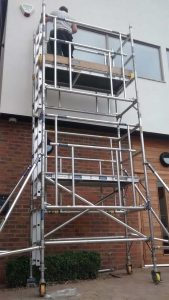
Mobile tower scaffolds in the UK have maximum platform heights of 12 metres indoors and 8 metres outdoors when freestanding. These limits apply to towers with proper stabilizers or outriggers under BS EN 1004:2020 standards. Platform height measures where you stand, while working height adds approximately 2 metres for arm reach above the platform.
Tied towers secured to building structures can exceed these freestanding limits but require professional scaffolders for installation. The height restrictions exist because stability decreases as towers get taller, wind exposure increases outdoors, and fall risks grow with height. Understanding these limits prevents accidents and ensures legal compliance for commercial work.
This guide covers UK maximum heights, current regulations, height calculations, and safety requirements for mobile tower scaffolds.
UK Maximum Heights for Mobile Tower Scaffolds
Maximum platform heights for mobile tower scaffolds depend on whether you’re working indoors or outdoors, and whether the tower stands freely or ties to a structure.
| Tower Type | Indoor Maximum | Outdoor Maximum | Requirements |
| Freestanding | 12m platform height | 8m platform height | Stabilizers/outriggers mandatory |
| Tied to structure | Above 12m possible | Above 8m possible | Professional installation required |
Platform height measures from ground to the working surface where you stand. This is the actual deck level you work from.
Working height adds approximately 2 metres to platform height, accounting for average person height plus arm reach. A 6m platform height gives roughly 8m working height.
Tower height measures from ground to the top of the guardrails, typically 1 metre above platform height. A 6m platform sits in a 7m tall tower.
Example calculation:
- Platform height: 6m (where you stand)
- Working height: 8m (what you can reach)
- Tower height: 7m (top of guardrails)
These measurements matter when choosing the size of the scaffold tower you need for your project. Always work from the working height to ensure you can reach your target area comfortably.
UK Regulations Governing Mobile Tower Scaffold Heights
Several regulations control mobile tower scaffold heights and usage in the UK. These standards protect workers and ensure equipment meets safety requirements.
BS EN 1004:2020 Standard
BS EN 1004:2020 sets the design, safety, and performance requirements for mobile access and working towers. This European standard replaced older height calculation methods, including the outdated 3:1 ratio between height and base width.
The standard covers:
- Structural design and load capacity
- Guardrail and toe board specifications
- Platform access requirements
- Stabilizer and outrigger specifications
- Maximum platform heights based on tower design
Manufacturers must test and certify their towers meet BS EN 1004:2020 before sale. The Health and Safety Executive provides scaffolding safety guidance that references this standard.
Modern calculations consider tower design, base dimensions, stabilizer configuration, and intended use rather than simple ratios. Each manufacturer provides specific maximum heights for their tower models based on these complex calculations.
Work at Height Regulations 2005
The Work at Height Regulations apply to all commercial work involving mobile tower scaffolds. These regulations require employers to:
- Conduct thorough risk assessments before work begins
- Plan work to minimize fall risks
- Use appropriate equipment for working at height
- Ensure competent persons assemble towers
- Provide adequate training for tower users
- Inspect equipment before each use
These regulations don’t apply to domestic DIY use in private homes, but following the same safety principles protects everyone working at height.
Health and Safety at Work Act 1974
This act requires all work equipment, including mobile tower scaffolds, to be safe and properly maintained. Employers must provide safe working conditions and ensure equipment meets current safety standards.
For mobile tower scaffolds, this means:
- Equipment certified to BS EN 1004:2020
- Regular maintenance and inspection
- Proper assembly by trained persons
- Safe systems of work at all heights
Freestanding vs Tied Mobile Tower Scaffolds
The distinction between freestanding and tied towers significantly affects maximum height capabilities.
Freestanding Towers
Freestanding towers rely on their base width and stabilizers for stability without attachment to buildings.
Indoor freestanding maximum: 12m platform height
- Protected from wind exposure
- Controlled environment
- Must use stabilizers or outriggers
- Requires firm, level floor
Outdoor freestanding maximum: 8m platform height
- Exposed to wind forces
- Weather conditions affect stability
- Stabilizers or outriggers essential
- Ground conditions critical
Standard aluminium scaffold towers work as freestanding units up to these maximum heights when properly configured with stabilizers.
Tied Towers
Tied towers secure to building structures at regular intervals using ties or anchors. This connection allows greater heights than freestanding configurations.
Key characteristics:
- Can exceed 12m platform height when properly tied
- Ties at specified intervals prevent swaying
- Resists wind loads through building attachment
- Requires professional scaffolders for installation
- Common in commercial and industrial settings
Lakeside Hire focuses on freestanding mobile tower scaffolds suitable for most residential and light commercial work. Tied tower installations fall outside typical hire scenarios and need specialist scaffolders.
Factors That Affect Maximum Height
Several elements determine how high you can safely build a mobile tower scaffold.
Base Width and Stabilizers
Wider bases provide more stability for taller towers. Stabilizers or outriggers effectively increase the base footprint without moving the vertical standards.
The old 3:1 ratio rule (tower height should not exceed 3 times the smallest base dimension) no longer applies. Modern BS EN 1004:2020 calculations use more complex engineering that considers multiple stability factors.
Stabilizers work by:
- Extending base width beyond tower footprint
- Lowering centre of gravity
- Increasing resistance to tipping
- Improving wind resistance
Always fit stabilizers when working near maximum heights. Most towers require them above 5-6m platform height even if manufacturer limits allow greater heights without them.
Indoor vs Outdoor Conditions
Location dramatically affects maximum safe height.
Indoor advantages:
- No wind exposure
- Stable temperature
- Protected from weather
- Typically level floors
- 12m platform height maximum
Outdoor challenges:
- Wind forces increase with height
- Weather affects stability
- Ground may be uneven or soft
- 8m platform height maximum
- Weather monitoring essential
Wind particularly affects tall towers. Stop work when wind speeds exceed safe limits for your tower height. Generally, avoid working above 6m in winds over 20mph.
Load Capacity
Platform load affects tower stability and safe working height. Typical domestic towers handle 150kg per platform, covering one or two workers with tools.
Heavier loads:
- Lower centre of gravity
- Increase stress on base
- May require height reduction
- Need verification against manufacturer specifications
Never exceed rated load capacity. Overloading creates serious tipping risks that worsen at greater heights.
Ground Conditions
Ground quality critically affects maximum safe height.
Firm, level ground:
- Supports full manufacturer height ratings
- Even load distribution
- Stable base positioning
- Maximum heights achievable
Soft or uneven ground:
- Reduces safe working height
- Creates instability risks
- May require base plates for load spreading
- Stair towers with adjustable legs handle uneven surfaces
Check ground conditions before assembly. Never build to maximum height on soft, sloped, or unstable ground regardless of manufacturer ratings.
What Happens If You Exceed Maximum Height
Exceeding maximum height limits creates serious safety and legal consequences.
Safety Risks
Tipping and collapse:
- Centre of gravity rises with height
- Stability decreases exponentially
- Small ground movement amplifies at top
- Total collapse possible in wind
Wind vulnerability:
- Tall towers catch more wind
- Platform movement affects work quality
- Worker balance compromised
- Sudden gusts cause dangerous sway
Load stability:
- Tools and materials more likely to fall
- Platform movement increases with height
- Worker movements affect entire structure
- Climbing becomes more dangerous
Construction safety data shows falls from height cause significant injuries and fatalities in UK construction. Working beyond rated heights multiplies these risks unnecessarily.
Legal Consequences
For commercial work:
- HSE enforcement action possible
- Unlimited fines for safety breaches
- Personal injury liability
- Insurance invalidation
- Work stoppage orders
Personal liability:
- Duty of care to workers and public
- Criminal prosecution for serious breaches
- Civil claims for injuries
- Reputation damage
HSE inspectors can issue improvement or prohibition notices for towers exceeding safe heights. Serious breaches lead to prosecution under Health and Safety at Work Act 1974.
How to Calculate Safe Height for Your Mobile Tower Scaffold
Follow these steps to determine appropriate tower height for your project.
Step 1: Check manufacturer specifications
- Read the user manual completely
- Note maximum platform heights listed
- Verify BS EN 1004:2020 compliance
- Check stabilizer requirements
Step 2: Determine indoor vs outdoor use
- Indoor allows up to 12m platform height
- Outdoor limits to 8m platform height
- Consider weather exposure
- Plan for wind conditions
Step 3: Assess ground conditions
- Verify firm, level surface
- Check for soft spots or slopes
- Ensure adequate drainage
- Plan base plate use if needed
Step 4: Calculate required working height
- Measure work area height from ground
- Add 2m for comfortable reach
- This gives required working height
- Subtract 2m to find needed platform height
Step 5: Verify compliance
- Confirm tower model reaches required height
- Check stabilizer availability
- Ensure all components available
- Plan assembly sequence
Step 6: Add stabilizers
- Fit stabilizers for heights above 5-6m
- Follow manufacturer specifications
- Verify proper attachment
- Check stability before climbing
Our guide to scaffold tower types explains different tower options for various height requirements.
Safety Requirements for Working at Maximum Heights
Working at or near maximum heights demands strict safety compliance.
Essential Equipment
Guardrails:
- Mandatory on all platforms above 2m
- Top rail and mid-rail required
- Must be fitted before climbing tower
- Remain in place during all work
Toe boards:
- Prevent tools and materials falling
- Required on all working platforms
- Minimum 150mm height
- Continuous around platform edges
Stabilizers or outriggers:
- Essential above 5-6m platform height
- Extend effective base width
- Must be fitted before climbing
- Lock securely in position
Level ground verification:
- Use spirit level on base
- Check all four corners
- Adjust before building higher
- Recheck after any movement
Weather monitoring:
- Wind speed limits apply
- Stop work in high winds (typically above 20mph for tall towers)
- Avoid work in storms or heavy rain
- Check forecasts before starting
Inspection Requirements
Inspect mobile tower scaffolds:
- Before each use at start of shift
- After any modifications or adjustments
- After adverse weather events
- Following any impact or unusual occurrence
- At regular intervals during extended use
Check:
- All connections tight and secure
- Guardrails and toe boards in place
- Platform boards properly positioned
- Stabilizers locked in position
- No damaged or bent components
- Ground remains firm and level
Only trained, competent persons should assemble mobile tower scaffolds. Training ensures proper assembly and safe use at all heights.
FAQs
What is the maximum height for a mobile tower scaffold in the UK?
Mobile tower scaffolds reach 12 metres platform height indoors and 8 metres platform height outdoors when freestanding. These limits apply to towers with proper stabilizers meeting BS EN 1004:2020 standards. Working height adds approximately 2 metres to platform height for arm reach.
Can I go higher than 12m with a mobile tower scaffold?
Freestanding mobile tower scaffolds cannot exceed 12m platform height indoors or 8m outdoors safely. Towers tied to building structures can go higher but require professional scaffolders for installation. Most hire towers are designed for freestanding use up to standard maximum heights.
What’s the difference between platform height and working height?
Platform height measures from ground to the deck surface where you stand. Working height adds approximately 2 metres for average person height plus arm reach. A 6m platform height provides roughly 8m working height. Always calculate from working height when planning projects.
Do I need stabilizers at maximum height?
Yes, stabilizers or outriggers are mandatory for mobile tower scaffolds above 5-6m platform height. At maximum heights of 8-12m, stabilizers are essential for stability and safety. Never climb a tall tower without properly fitted and locked stabilizers.
Can I use a mobile tower scaffold above 8m outdoors?
No, freestanding mobile tower scaffolds should not exceed 8m platform height outdoors due to wind exposure and weather effects. Indoor use allows up to 12m platform height in protected environments. Exceeding outdoor limits creates serious tipping and collapse risks.
What regulations govern mobile tower scaffold heights?
BS EN 1004:2020 sets design and safety standards including maximum heights. Work at Height Regulations 2005 govern commercial use and require risk assessments and proper training. Health and Safety at Work Act 1974 requires safe equipment and maintenance. All these regulations apply to mobile tower scaffold heights in the UK.
How do I know if my tower meets BS EN 1004:2020?
Check for certification marks on the tower frame and in the user manual. Reputable hire companies only stock BS EN 1004:2020 certified equipment. Lakeside Hire provides certified towers with documentation proving compliance. Never hire from suppliers who can’t demonstrate current standard compliance.
Final Thoughts
Mobile tower scaffold maximum heights in the UK are 12 metres platform height for indoor freestanding use and 8 metres platform height for outdoor freestanding use. These limits ensure stability, account for wind exposure, and protect workers from fall risks.
BS EN 1004:2020 sets current standards replacing older calculation methods like the 3:1 ratio. Always follow manufacturer specifications, fit proper stabilizers, check ground conditions, and verify weather suitability before working at height.
Platform height measures where you stand, working height adds 2 metres for reach, and tower height includes guardrails above the platform. Understanding these distinctions prevents confusion when planning projects.
Never exceed maximum heights regardless of project pressure. The safety risks, potential for serious injury, and legal consequences far outweigh any perceived time savings. Hire appropriate equipment for your required working height and work within safe limits.
Lakeside Hire provides BS EN 1004:2020 certified mobile tower scaffolds across all height ranges with next-day delivery nationwide. Our towers include all necessary safety equipment and come with clear assembly instructions.
Call 01708 866566 for guidance on which mobile tower scaffold height suits your specific project requirements.


